Death Valley National Park- California
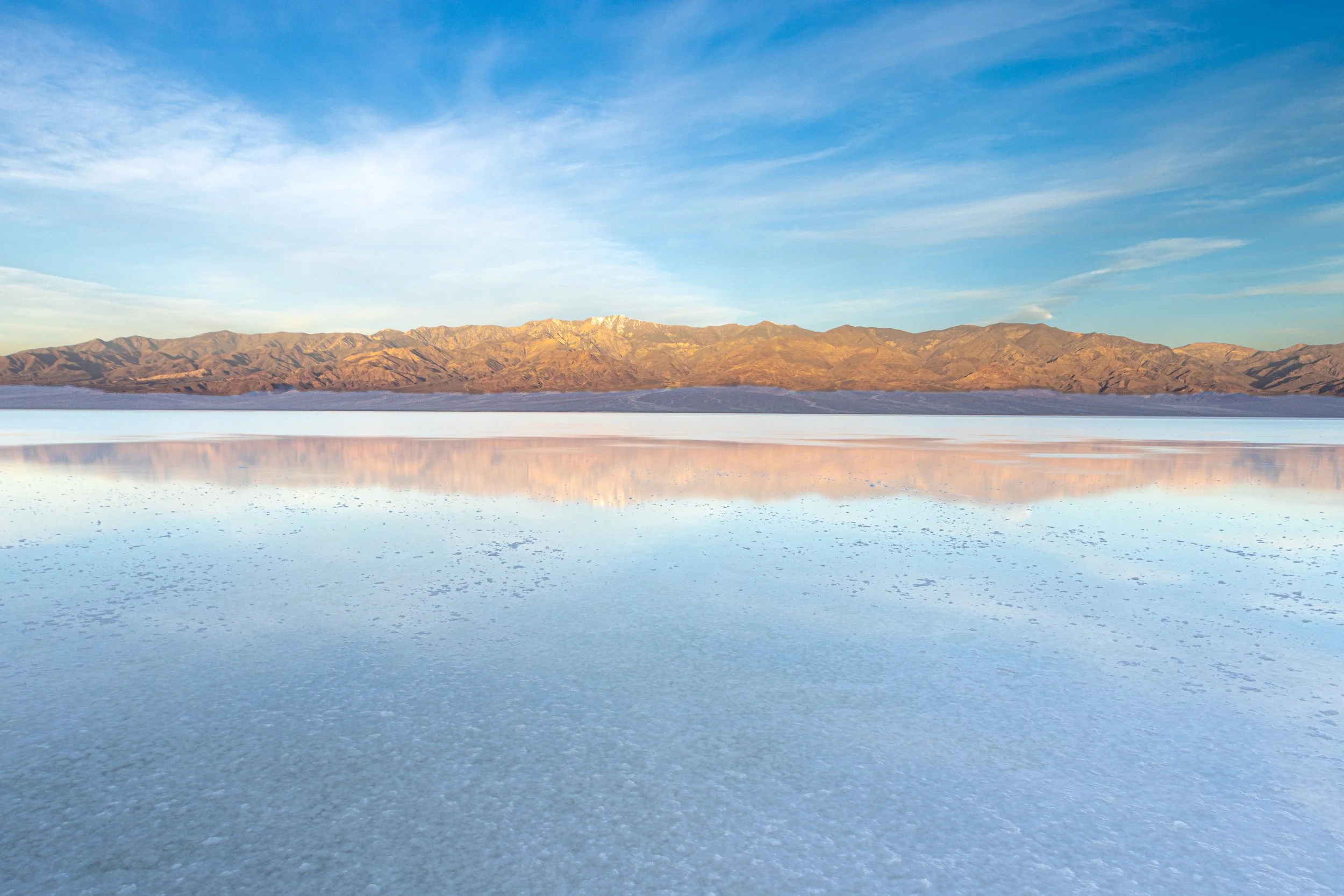
Lake Manly- Bad Water Basin- Death Valley National Park
When most people think of Death Valley National Park, they picture endless salt flats, shimmering heat waves, and one of the hottest places on Earth. While those iconic landscapes certainly exist, they tell only a small part of the story. Death Valley is a park full of surprises—a place where towering mountain peaks overlook vast desert basins, narrow slot canyons twist through colorful rock formations, and some of the darkest night skies in the United States come alive after sunset.
Located along the California-Nevada border, Death Valley National Park is one of the most remote destinations in the National Park System. That sense of isolation is part of its magic. Miles from busy cities and crowded highways, the park offers a rare opportunity to disconnect from the outside world and immerse yourself in an extraordinary landscape unlike anywhere else.
We visited the park in March, which proved to be one of the best times of year to explore. Although temperatures were warmer than average during our visit, daytime conditions were still comfortable enough for hiking and photography, while mornings and evenings remained refreshingly cool. Spring offers a welcome break from the extreme summer heat, making it possible to spend long days exploring without constantly battling triple-digit temperatures.
What impressed us most wasn't just the famous Badwater Basin or the endless desert vistas—it was the incredible diversity packed into one national park. In a single day, you can photograph sunrise on the salt flats nearly 300 feet below sea level, hike through colorful canyons carved over millions of years, and end the evening watching the sun dip below the Panamint Range from Dante's View, perched nearly 6,000 feet above the valley floor. Few places offer such dramatic changes in elevation, scenery, and perspective within such a short drive.
For photographers, Death Valley is nothing short of a dream destination. The constantly changing light transforms the landscape from soft pastel hues at dawn to rich golden tones at sunset. The unique textures of cracked mud, sweeping sand dunes, rugged mountains, and brilliant salt formations provide endless compositional opportunities. And when darkness falls, the park's designation as an International Dark Sky Park reveals an incredible canopy of stars, making it one of the finest places in North America for night sky photography.
Whether you're visiting to experience one of America's most unique national parks, capture unforgettable images, or simply witness a landscape that defies expectations, Death Valley National Park delivers an adventure that is every bit as beautiful as it is unforgettable.
Top 5 Places to Photograph
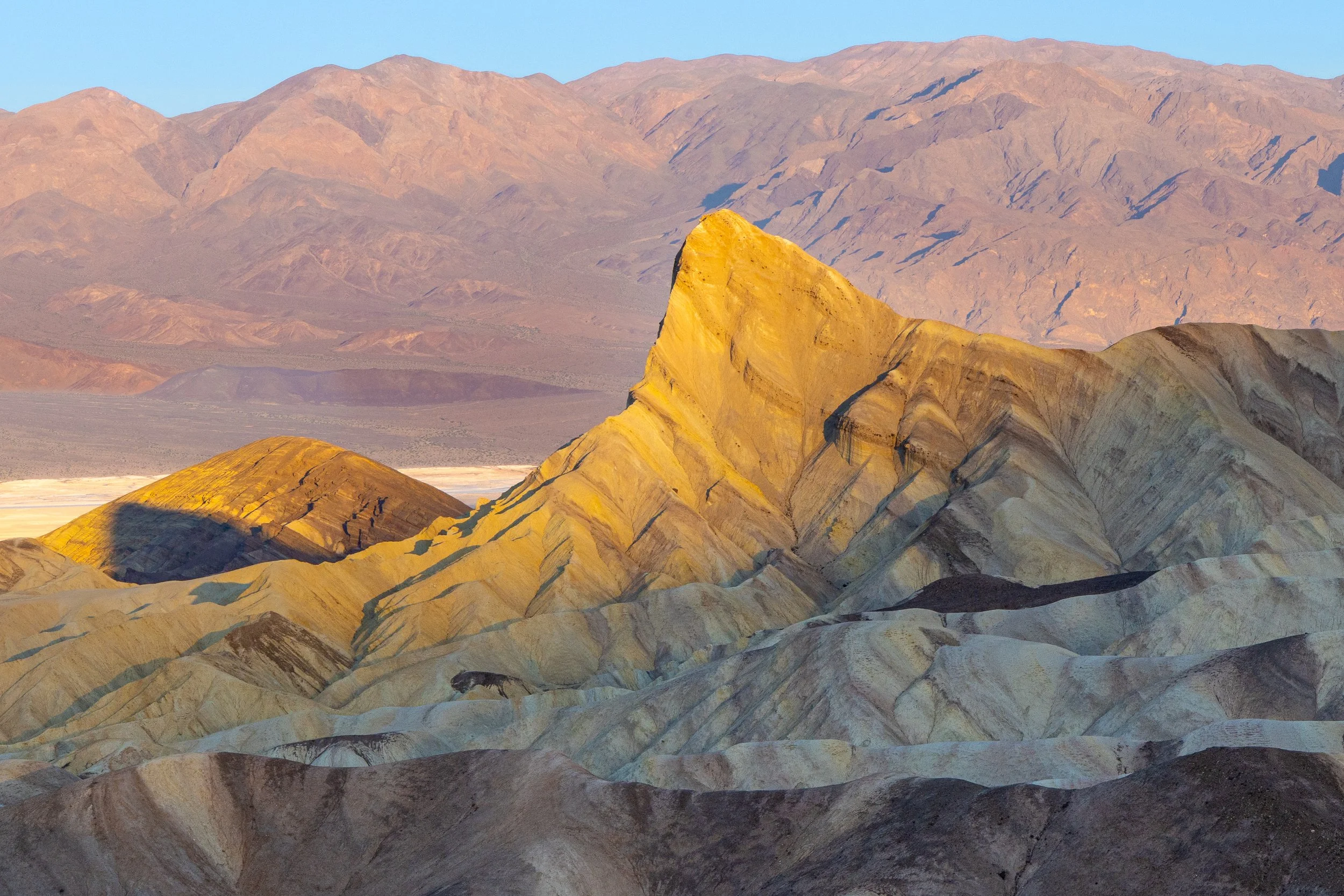
Sunrise at Zabriskie Point
#1 Zabriskie Point
If there is one location in Death Valley National Park that should be on every photographer's itinerary, it is Zabriskie Point. One of the park's most iconic overlooks, this easily accessible viewpoint offers a breathtaking panorama of golden badlands, deeply carved ridges, and rugged peaks that seem almost otherworldly. The landscape was sculpted over millions of years by erosion, creating an endless maze of rolling hills and sharp gullies that stretch toward the distant mountains.
The unmistakable centerpiece of the view is Manly Beacon, a striking pyramid-shaped formation that rises dramatically from the surrounding badlands. Its warm golden tones stand in beautiful contrast to the darker mountains beyond, making it a natural focal point for photographs.
Sunrise is widely considered the best time to visit Zabriskie Point. As the first rays of sunlight spill across the landscape, the low-angle light creates long shadows that reveal every ridge, crease, and ripple in the terrain. The interplay of light and shadow gives the badlands remarkable depth and texture, transforming what might appear flat in midday light into an incredibly dynamic scene. During the golden hour before sunset, the hills once again glow with rich shades of gold, orange, and amber, offering photographers another opportunity to capture the landscape at its finest.
While the main overlook provides stunning compositions, don't stop there. The Badlands Loop Trail begins just beyond the viewpoint and allows visitors to venture deeper into the landscape. Even a short walk down the trail opens up new angles, leading lines, and compositions that many visitors miss. As you move away from the overlook, you'll find quieter vantage points where the rolling hills seem to stretch endlessly into the distance.
For photographers, a wide-angle lens is perfect for capturing the expansive scene, while a telephoto lens can isolate the intricate patterns and textures carved into the hillsides. Arriving at least 30 minutes before sunrise allows time to set up your composition and enjoy the subtle color changes that occur before the sun crests the horizon. If clouds are present, they often catch the early morning light and add even more drama to an already spectacular landscape.
Whether you're visiting for your first trip to Death Valley or returning for another adventure, Zabriskie Point is one of those places that never disappoints. It perfectly showcases the incredible beauty, scale, and unique geology that make Death Valley National Park unlike anywhere else in the world.
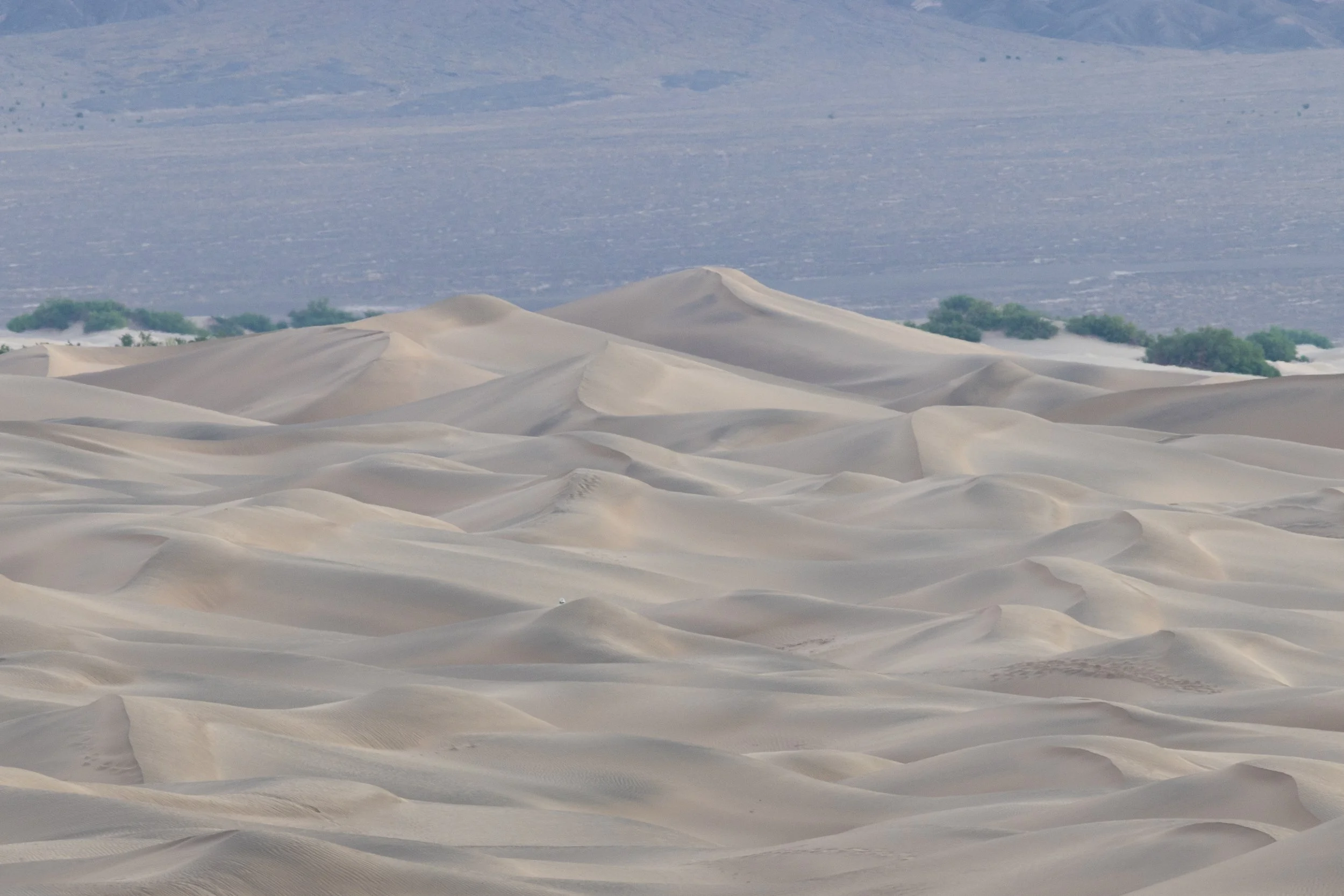
Mesquite Flat Sand Dunes
#2 Mesquite Flat Sand Dunes
The Mesquite Flat Sand Dunes are one of Death Valley National Park's most photographed landscapes and offer a completely different experience from the colorful badlands and salt flats found elsewhere in the park. Stretching across the valley floor, these graceful dunes create an ever-changing landscape of flowing curves, wind-sculpted ridges, and dramatic textures that seem to shift with every gust of wind.
Unlike many of the park's overlooks, the dunes invite exploration. There are no designated trails, allowing visitors to wander freely and discover their own unique compositions. While the dunes closest to the parking lot are the easiest to reach, they also receive the most foot traffic. If you're hoping to capture pristine, untouched sand with clean lines and no footprints, plan to hike 20 to 30 minutes deeper into the dune field. The farther you venture, the quieter it becomes, rewarding you with sweeping landscapes that feel completely wild and untouched.
For photographers, timing is everything. Sunrise is often the best time to visit, as the low-angle light casts long shadows that accentuate every ripple and ridge carved into the sand by the wind. The warm morning light adds beautiful golden tones while creating incredible depth and contrast. Sunset offers equally dramatic conditions, bathing the dunes in rich orange and amber hues before the mountains fade into silhouette.
One of the most enjoyable aspects of photographing Mesquite Flat is its versatility. A wide-angle lens can capture the sweeping scale of the dune field with the surrounding mountains providing a dramatic backdrop. A telephoto lens, on the other hand, allows you to isolate repeating patterns, graceful curves, and delicate textures, creating abstract and minimalist images that emphasize shape, light, and shadow. Even small details—like a lone mesquite bush, a single set of animal tracks, or the intricate ripples left behind by the wind—can become compelling subjects.
Walking the dunes can be more physically demanding than it appears. Soft sand makes every step a workout, so carry plenty of water, wear sturdy footwear, and allow yourself extra time if you plan to explore farther into the dune field. Fortunately, the effort is well worth it. Standing atop one of the taller dunes as the first light of day spreads across the desert is an unforgettable experience and one of the most peaceful moments you'll find anywhere in Death Valley National Park.
Whether you're creating sweeping landscape images, intimate abstracts, or simply enjoying the silence of the desert, the Mesquite Flat Sand Dunes offer endless creative opportunities. It's a location where slowing down, exploring beyond the crowds, and paying attention to the smallest details often leads to the most rewarding photographs.
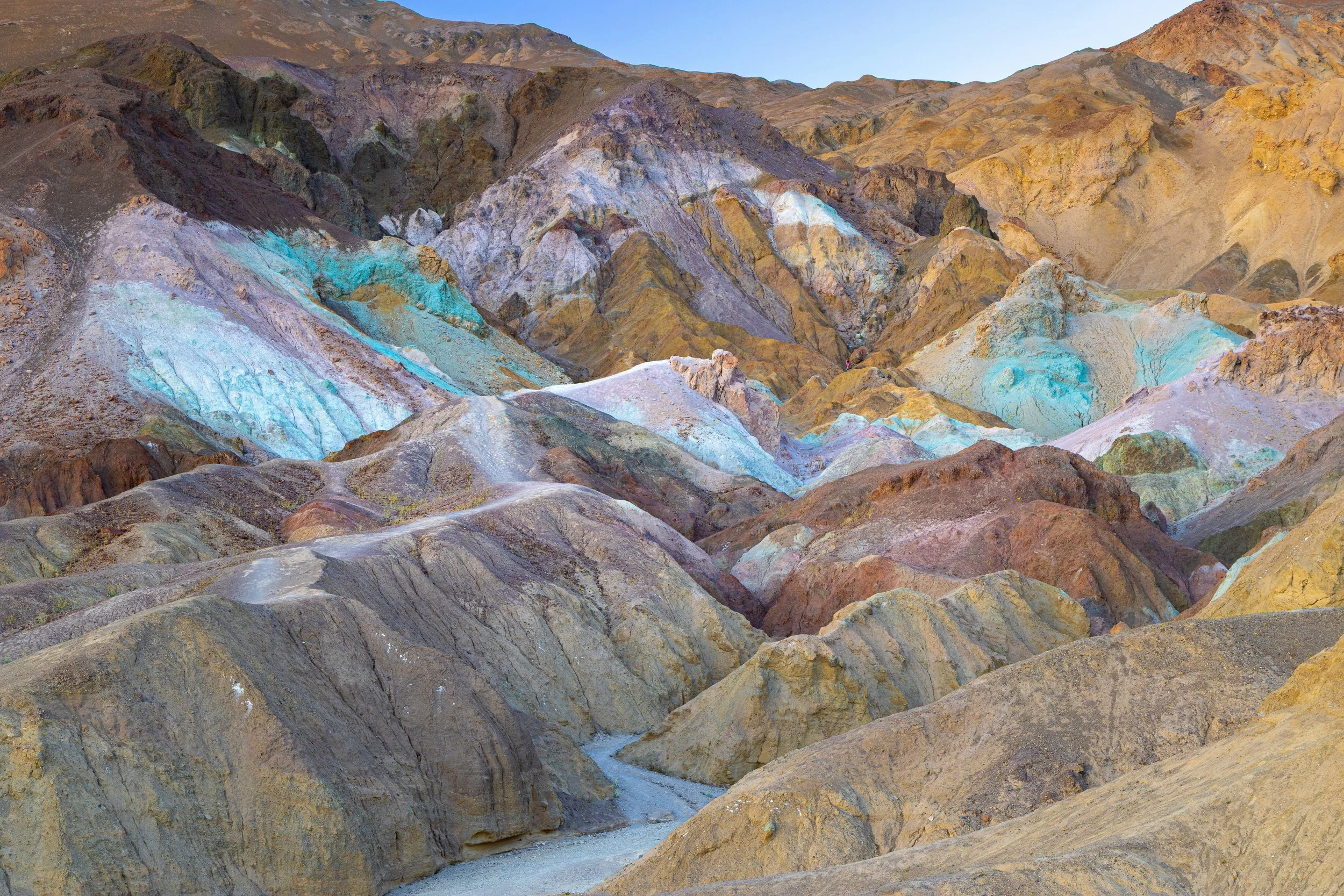
Artist's Palette
#3 Artist's Palette
If you've ever wondered whether the desert can be colorful, Artist's Palette provides a spectacular answer. Tucked along the scenic nine-mile Artist's Drive, this remarkable geological formation showcases hillsides streaked with vibrant shades of pink, lavender, teal, green, yellow, and even hints of blue. It is one of Death Valley National Park's most unique landscapes and a must-visit stop for photographers and geology enthusiasts alike.
The incredible colors are not the result of wildflowers or minerals deposited by water, but rather millions of years of volcanic activity and oxidation. Different metals within the ancient volcanic ash have weathered over time, producing the stunning palette of colors seen today. Iron creates reds and oranges, manganese contributes purples, while chlorite and other minerals produce the striking greens and teals that make this location so distinctive.
Unlike many landscape photography locations where photographers chase the soft light of sunrise and sunset, Artist's Palette is one of the rare places that often looks its best under bright midday sunlight. With the sun high overhead, the colorful hills are evenly illuminated, allowing the vibrant mineral deposits to stand out with maximum intensity. During the golden hours, long shadows can obscure portions of the colorful slopes, making the hues appear less pronounced. Because of this, Artist's Palette makes an excellent midday destination before heading to one of Death Valley's famous sunset viewpoints.
The short walk from the parking area leads visitors directly into the colorful hills, where new compositions appear around every corner. Wide-angle lenses are perfect for capturing the sweeping landscape, while telephoto lenses can isolate fascinating patterns, layers, and abstract combinations of color and texture. As you explore, you'll notice how every change in angle reveals a slightly different mix of colors, making it worthwhile to slow down and look beyond the obvious viewpoints.
One of the highlights of visiting Artist's Palette is the drive itself. Artist's Drive is a scenic one-way loop that winds through colorful desert hills, rugged canyons, and dramatic rock formations. There are numerous pullouts along the route, each offering unique perspectives that many visitors simply drive past. Taking your time along the drive often leads to unexpected photographic opportunities long before you reach the main overlook.
Artist's Palette is a reminder that Death Valley is far more than endless sand and salt flats. It is a park filled with incredible geological diversity, where every stop offers something completely different from the last. For photographers, it's an opportunity to capture vibrant colors and abstract compositions that stand apart from the classic desert landscapes found throughout the American Southwest.
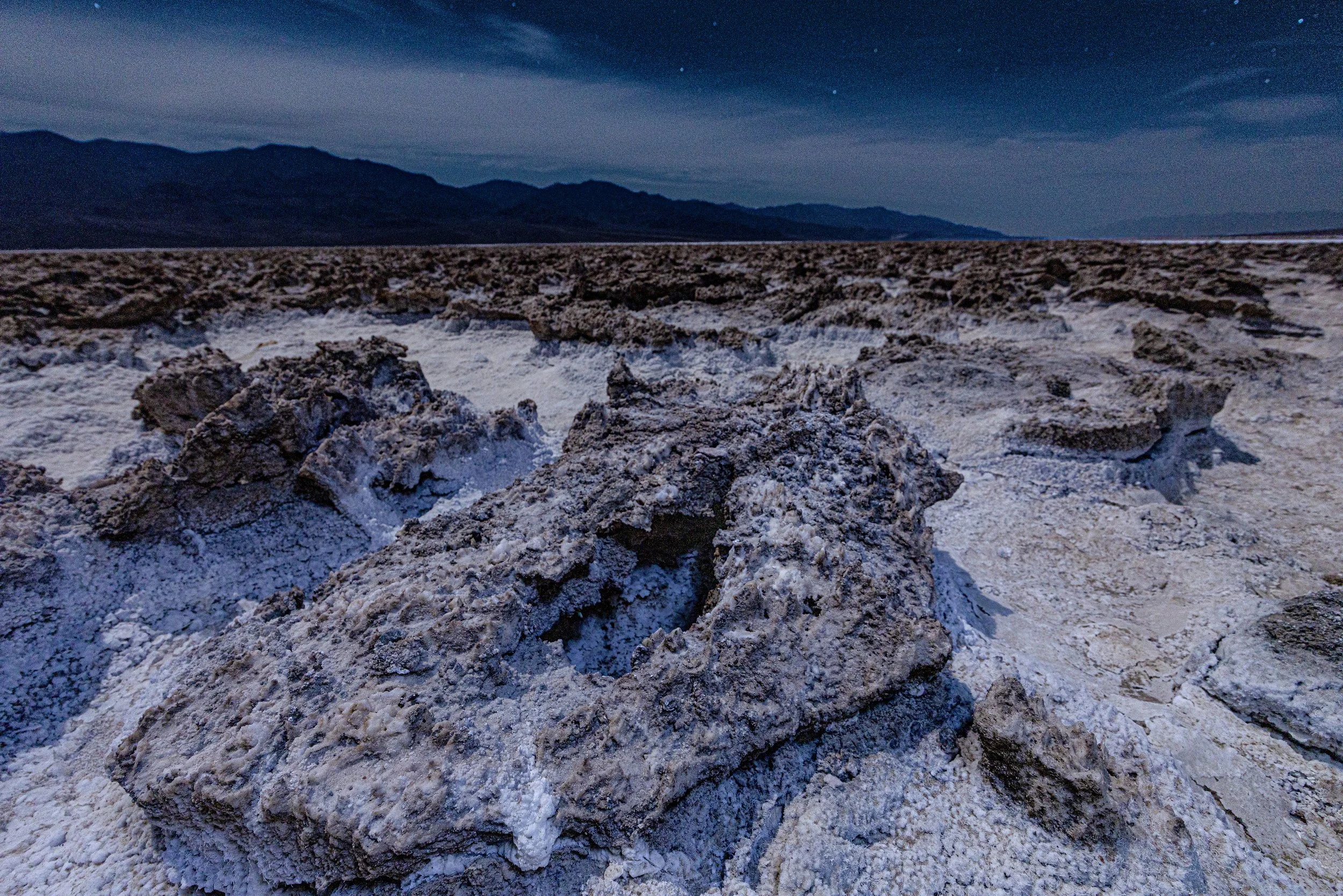
Devil’s Golf Course Badwater Basin
#4 Badwater Basin
No visit to Death Valley National Park is complete without experiencing Badwater Basin, the lowest point in North America. Sitting 282 feet (86 meters) below sea level, this iconic location is one of the park's most recognizable landmarks and offers an unforgettable landscape unlike anywhere else on Earth. Standing on the seemingly endless white salt flats, surrounded by towering mountain ranges, it's easy to appreciate just how vast and extreme Death Valley truly is.
The basin gets its name from a small spring near the parking area. While the water is too salty for people to drink, it supports tiny snails and other hardy organisms that have adapted to this harsh environment. Just above the spring, a sign mounted high on the cliff marks sea level, providing a striking visual reminder of how far below the ocean you are standing.
The real photographic magic, however, lies farther out on the salt flats. Most visitors stop near the boardwalk, but the famous hexagonal salt polygons become larger, cleaner, and more defined the farther you walk from the parking lot. A 15- to 30-minute walk across the flats rewards photographers with pristine patterns that have been shaped over time by the expansion and contraction of the salt crust. These naturally occurring geometric formations create incredible foreground interest and are among the most unique photographic subjects in the National Park System.
Sunrise is widely considered the best time to photograph Badwater Basin. As the first light reaches the valley floor, the salt polygons glow with soft golden tones while the Panamint Mountains catch the warm morning light. The low sun creates subtle shadows that emphasize the intricate textures of the salt crust without overpowering the delicate details. The cool morning temperatures also make the walk across the exposed basin much more comfortable than later in the day.
On rare occasions, winter storms or unusually heavy rainfall leave a thin layer of water covering portions of the basin. When this happens, Badwater transforms into a giant natural mirror, producing breathtaking reflections of the surrounding mountains and sky. These fleeting conditions create some of the most sought-after images in Death Valley, turning an already spectacular location into a photographer's dream.
Badwater Basin is equally rewarding for both wide-angle and telephoto photography. A wide-angle lens allows you to showcase the immense scale of the salt flats while using the hexagonal patterns as strong foreground elements that lead the viewer's eye toward the distant mountains. A telephoto lens, meanwhile, is perfect for compressing the landscape and isolating repeating patterns, abstract textures, and layers of colorful mountains rising beyond the white basin.
Although the landscape appears barren at first glance, taking time to slow down and explore reveals endless photographic opportunities. Every few steps the salt polygons change shape and size, offering new compositions that make each visit unique. Whether you're capturing the first light of day, experimenting with minimalist compositions, or photographing rare reflections after a rainstorm, Badwater Basin is one of Death Valley's most rewarding locations and a place that every landscape photographer should experience at least once.
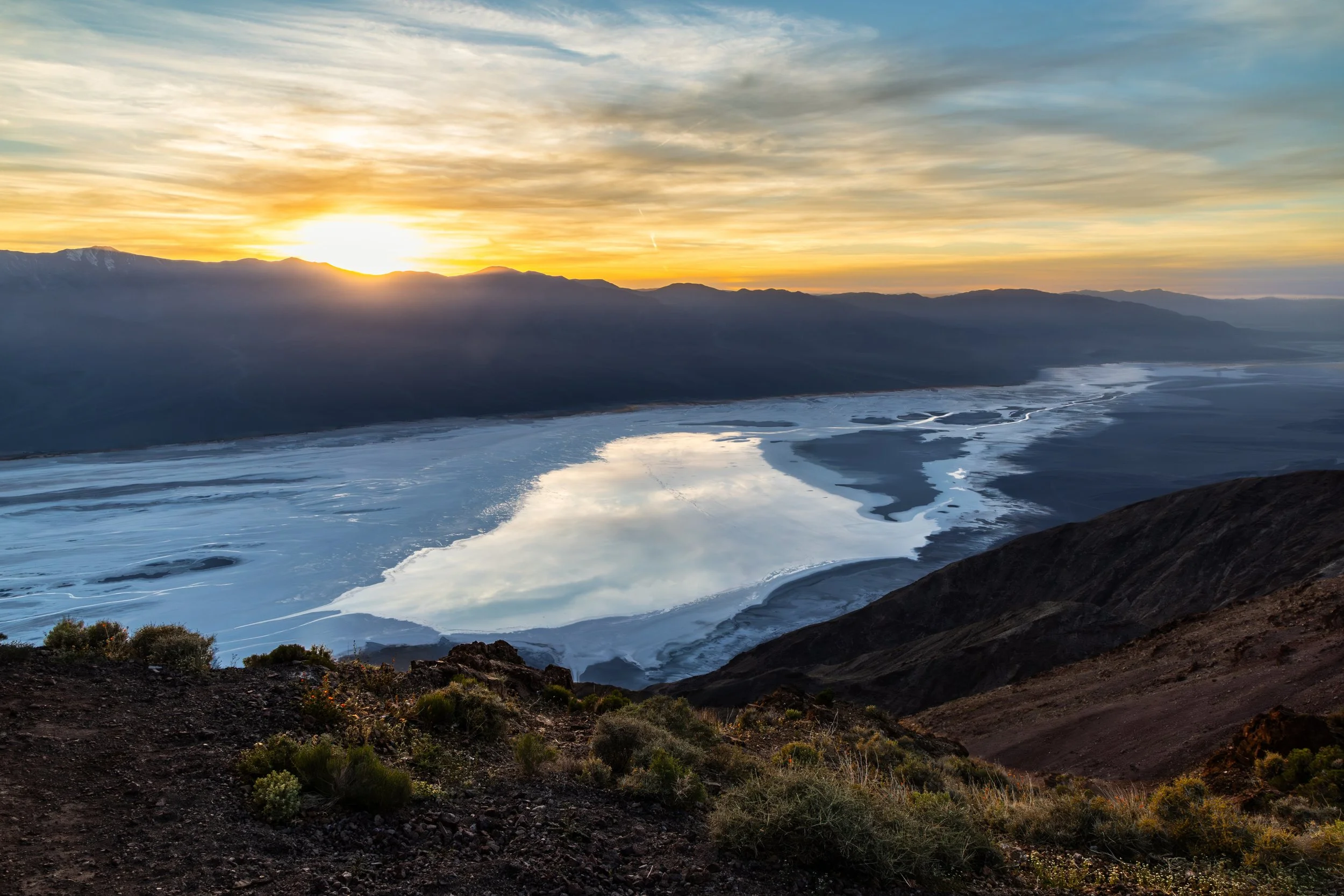
Sunset at Dante’s View
#5 Dante’s View
If there is one place that truly showcases the immense scale of Death Valley National Park, it is Dante's View. Perched at an elevation of approximately 5,500 feet above sea level, this spectacular overlook provides one of the most breathtaking panoramic vistas in the entire National Park System. From this lofty vantage point, visitors can gaze across the vast expanse of Death Valley, where the brilliant white salt flats of Badwater Basin stretch across the valley floor nearly 6,000 feet below. On a clear day, the contrast between the valley's lowest point and the towering peaks of the Panamint Range creates a scene that is both humbling and unforgettable.
The drive to Dante's View is an adventure in itself, climbing from the desert floor through winding mountain roads to an overlook that feels like you're standing on the edge of the world. As the elevation increases, temperatures often drop significantly, providing a welcome escape from the heat of the valley below. It's not uncommon for the temperature at the summit to be 15 to 25 degrees cooler than Badwater Basin, making it a comfortable stop even on warmer days.
For photographers, Dante's View offers endless creative possibilities. A wide-angle lens is the obvious choice, allowing you to capture the immense sweep of the valley from the salt flats below to the rugged peaks that frame the horizon. The layered mountain ranges, dramatic changes in elevation, and sweeping curves of the valley create a remarkable sense of depth and scale. On exceptionally clear days, you may even spot the snow-capped summit of Telescope Peak rising more than 11,000 feet above sea level—a striking reminder of Death Valley's incredible elevation extremes.
Sunset is arguably the most magical time to visit. As the sun begins to sink behind the Panamint Mountains, warm golden light washes across the valley, gradually giving way to rich shades of orange, pink, and purple. The changing light creates dramatic shadows that reveal the intricate folds and textures of the surrounding mountains while illuminating the salt flats far below. Arriving at least an hour before sunset gives you plenty of time to explore different compositions and watch the landscape transform as the light evolves.
Dante's View is also one of the park's premier locations for night photography. Thanks to Death Valley's designation as an International Dark Sky Park and the minimal light pollution found in this remote region, the stars put on an incredible display after darkness falls. On moonless nights, the Milky Way often stretches brilliantly across the sky, providing photographers with an opportunity to create stunning images that combine the expansive landscape with one of the darkest skies in North America.
Whether you're visiting for sunrise, sunset, or under a canopy of stars, Dante's View offers a perspective that few places can match. Standing high above the valley floor, it's easy to appreciate the immense beauty, dramatic geology, and staggering scale that make Death Valley National Park one of the most extraordinary landscapes in the American West. For many visitors, it's not just one of the highlights of the park—it's one of the most memorable viewpoints in the entire National Park System.
Essential Gear And Supplies

Take It With You!
Death Valley is one of the most beautiful and unique landscapes in the National Park System, but it is also one of the most unforgiving. Proper preparation can make the difference between an unforgettable adventure and a miserable experience. Here are my top ten essentials for making the most of your visit.
1. Water – More Than You Think You'll Need
If there is one item you absolutely cannot skimp on, it's water. Even during the cooler months, the desert is incredibly dry, and dehydration can sneak up on you before you realize it. Bring significantly more water than you think you'll need, and drink consistently throughout the day—not just when you feel thirsty.
If you're planning to hike away from your vehicle, carry extra water as an emergency reserve. In Death Valley, running out of water isn't just inconvenient—it can quickly become dangerous.
2. Wide-Angle Lens
Death Valley is a paradise for landscape photographers. From the sweeping vistas at Dante's View to the endless salt flats of Badwater Basin and the towering sand dunes of Mesquite Flat, a wide-angle lens is one of the most valuable pieces of gear you can pack.
Get low, use interesting foreground elements, and let the vast desert landscape fill your frame. Some of the park's most memorable images come from slowing down and carefully composing your shot.
3. Telephoto Lens
Don't leave your telephoto lens at home. While Death Valley is known for its expansive landscapes, a longer lens is perfect for isolating mountain layers, compressing distant ridgelines, and capturing abstract patterns in the colorful badlands.
A telephoto also comes in handy for photographing wildlife from a safe distance. You may encounter bighorn sheep, coyotes, jackrabbits, roadrunners, and a variety of birds. Always give wildlife plenty of space and never approach animals for a photograph.
4. Tripod
A sturdy tripod is one of the best investments a landscape photographer can make. It allows you to create tack-sharp images during sunrise and sunset, capture silky long exposures, and photograph the incredible night skies that Death Valley is famous for.
Even during the day, a tripod encourages you to slow down, refine your composition, and think more intentionally about every photograph.
5. Circular Polarizer
A circular polarizer can be incredibly useful in Death Valley, especially during the middle of the day. It helps reduce glare on rocks, enhances contrast in colorful formations like Artist's Palette, and deepens blue skies when conditions are right.
Keep in mind that polarizers reduce the amount of light reaching your camera sensor. Remove it when shooting after sunset, before sunrise, or when photographing the Milky Way.
6. Neutral Density (ND) Filters
While Death Valley isn't known for waterfalls, neutral density filters can still be valuable. They're perfect for creating long exposures that smooth moving clouds over the dunes or capture dramatic movement in the sky.
If you're fortunate enough to visit after one of Death Valley's rare rainstorms, an ND filter can also help create beautiful long-exposure reflections on the temporary lakes that occasionally form at Badwater Basin.
7. Sun Protection
The desert sun is relentless, even in winter. A wide-brimmed hat, sunglasses, lightweight long sleeves, and plenty of sunscreen are just as important as your camera gear.
Many of Death Valley's best photography locations offer little to no shade, so protecting yourself from prolonged sun exposure will keep you comfortable and energized throughout the day.
8. Layers for Changing Temperatures
Many first-time visitors expect Death Valley to be hot all the time, but mornings and evenings can be surprisingly cool, especially from late fall through early spring. If you're heading to higher elevations like Dante's View, temperatures can be 20 degrees cooler than on the valley floor.
Dress in lightweight layers so you can comfortably adapt as temperatures change throughout the day.
9. Sturdy Hiking Shoes
You don't need heavy mountaineering boots for most locations in Death Valley, but comfortable hiking shoes with good traction are highly recommended. Uneven rocks, loose gravel, salt flats, and soft sand can all make walking more challenging than expected.
Whether you're hiking Golden Canyon, exploring Mosaic Canyon, or trekking deep into the Mesquite Flat Sand Dunes for untouched compositions, your feet will thank you for investing in quality footwear.
10. A Full Tank of Gas and a Vehicle Emergency Kit
Unlike many national parks, services in Death Valley are few and far between. Gas stations can be more than an hour apart, and cell service is extremely limited throughout much of the park.
Fill your gas tank whenever you have the opportunity, carry a paper map or download offline maps before arriving, and keep a basic emergency kit in your vehicle that includes extra water, snacks, a flashlight, and a first aid kit. It's always better to be overprepared than stranded in one of the most remote parks in the country.
Final Thoughts
Death Valley rewards those who come prepared. The park's dramatic landscapes, incredible geological diversity, and world-class night skies offer endless opportunities for photography, but the desert demands respect. With the right gear, plenty of water, and a little planning, you'll be able to focus on what really matters—experiencing one of the most extraordinary landscapes in North America and coming home with photographs you'll be proud of for years to come.